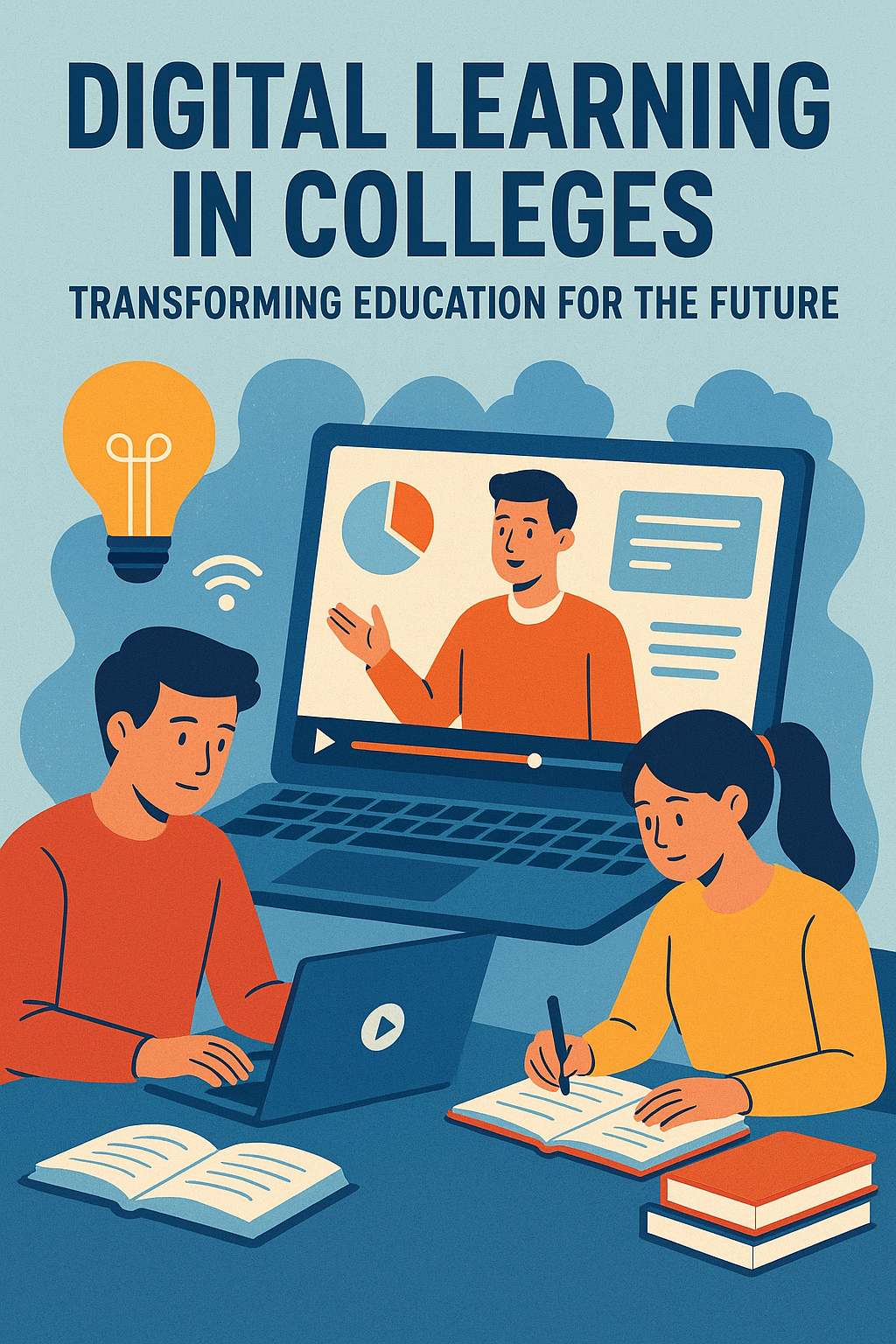
In the modern era of technology and innovation, education is no longer confined within the four walls of a classroom. The rise of digital learning has completely transformed the way students acquire knowledge, interact with teachers, and develop professional skills. Today, colleges across the world are rapidly adopting digital tools to enhance teaching methods, making learning more flexible, engaging, and effective.

What is Digital Learning?
Digital learning refers to the use of technology to access educational content outside of traditional classrooms. It includes e-learning platforms, online courses, digital classrooms, virtual labs, recorded lectures, and other internet-based learning resources. Through these tools, students can study at their own pace, interact with teachers in real time, and access unlimited information from anywhere.

The Role of Digital Learning in Modern Colleges
Colleges today are no longer dependent only on physical lectures or textbooks. With the help of technology, they are creating a hybrid learning environment — combining the best of online and offline education. Smart classrooms, digital whiteboards, online attendance, and learning management systems (LMS) have become common features in modern campuses.
Students can now use apps and platforms like Google Classroom, Microsoft Teams, Zoom, and Coursera to attend virtual classes, submit assignments, and collaborate on projects. This not only improves accessibility but also encourages students to become independent learners.
Benefits of Digital Learning
1. Flexibility and Convenience:
Students can learn anytime, anywhere. Whether they are at home or traveling, digital tools provide access to study materials and recorded lectures 24/7.
2. Personalized Learning Experience:
Every student learns differently. Digital learning allows them to progress at their own pace and revisit lessons whenever needed.
3. Global Exposure:
Online courses and webinars connect students with international experts and institutions, offering a global perspective on education.
4. Enhanced Engagement:
Interactive videos, gamified learning modules, and virtual simulations make the learning process exciting and practical.
5. Skill Development:
Apart from academics, students can learn digital skills like data analysis, marketing, coding, and content creation — essential for modern careers.
Challenges of Digital Learning
While digital learning offers countless opportunities, it also brings certain challenges. Not every student has access to high-speed internet or digital devices. Technical issues, distractions, and lack of face-to-face interaction can sometimes affect focus and understanding. Additionally, teachers need proper training to effectively use online tools and manage digital classrooms.
The Future of Learning
The future of education lies in the perfect blend of traditional and digital methods — often called “Hybrid Learning.” This approach combines classroom interaction with the convenience of online learning. It ensures that students not only gain knowledge but also develop critical thinking, creativity, and communication skills.
As technology continues to evolve, tools like Artificial Intelligence (AI), Virtual Reality (VR), and Augmented Reality (AR) will make learning even more immersive and personalized. Colleges that embrace these innovations today will lead the way in shaping tomorrow’s leaders.
Conclusion
Digital learning is more than just an educational trend — it is a revolution in the way knowledge is shared and absorbed. By integrating technology into education, colleges are preparing students for a fast-changing digital world. It empowers learners to think beyond textbooks, explore limitless possibilities, and become innovators of the future.
The colleges that adapt to digital learning are not only upgrading their teaching systems but also contributing to the transformation of the entire education ecosystem. The future of learning is digital — and it’s already here.